Facelift Overview

Natural, Tension-free Facial Rejuvenation by Double Board-Certified Facial Plastic Surgeon Dr. Philip A. Young

Restoring youthful facial and neck contours with refined surgical precision for a naturally rejuvenated, balanced appearance.

Background media
Dr. Young

Who is a Candidate for a Facelift?

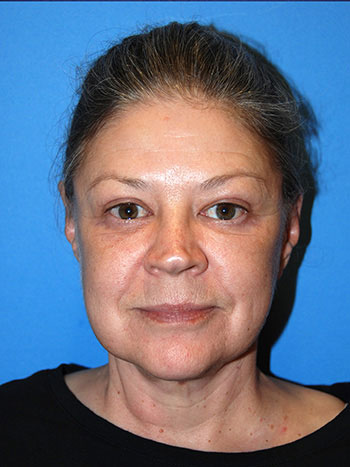
Most people need filling with age. If you have jowls and folds around your mouth, you can use a facelift. If you have neck laxity or extra neck fat (like turkey neck or double chin), you could benefit from a neck lift. Everything else in the face can be improved with filling and fat injections. You can also choose the YoungVitalizer that fills your face. Your facial tissues move in an inward and downward path. Traditional procedures shift your face in an upward and backward path. However, reversing the aging process is more accurately done in an upward and outward path, the exact opposite of the aging process.

This is one of the main reasons why traditional procedures created an unnatural look. What adding volume and reshaping your face does is lift and push it outward. Dr. Young never stops studying the intricate nature of beauty and understanding its importance in our lives. Based on his research, he understands beauty leads to good things. We all appreciate beauty. We like things to be in order and symmetrical, part of beauty. Dr. Young has found that beauty can be defined as order in the face. He has 20 years of experience and has performed over 1,400 facelifts and neck lifts.

Click Here to See Our Facelift YouTube Video Playlist

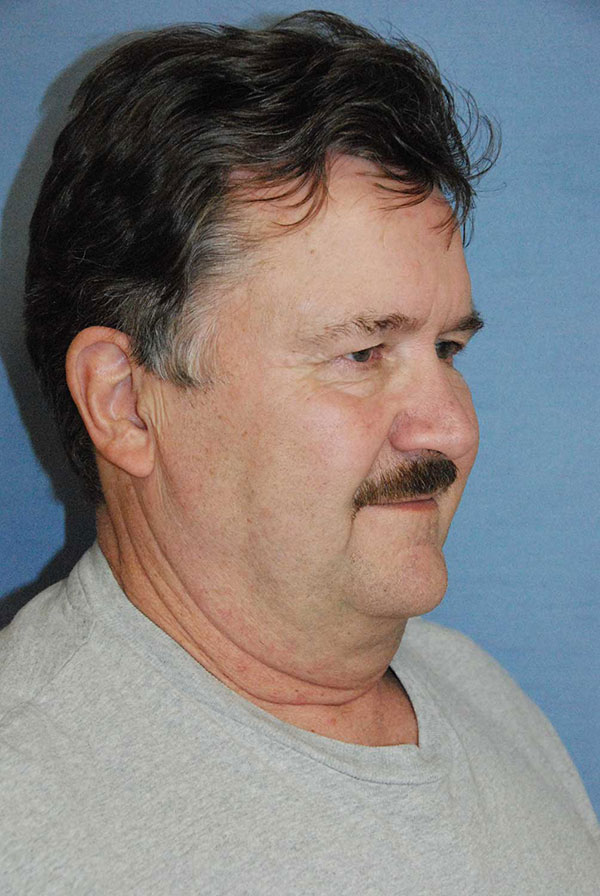
Facelift before

60's Caucasian Male with Severe Neck Sagging & Laxity, Facial Jowling & Platysmal Muscle Banding Before Facelift Neck Lift Oblique View

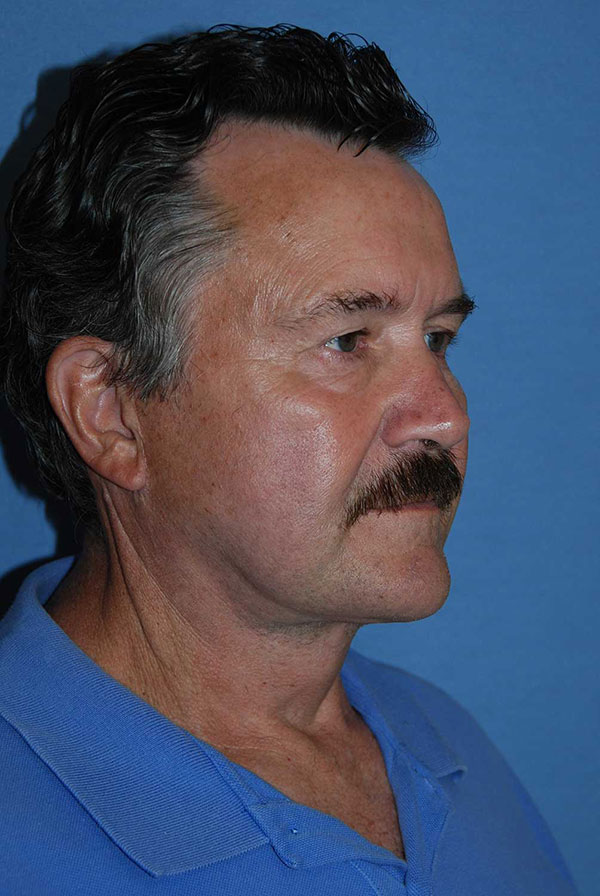
Facelift after

60's Caucasian Male with Severe Neck Sagging & Laxity, Facial Jowling & Platysmal Muscle Banding After Facelift Neck Lift Oblique View

woman touching her face

Consultation

During your initial consultation with Dr. Young, you will be advised to stay off blood thinners and stop taking fish oil, vitamin E, herbal medications, supplements, aspirin, and anti-inflammatories for a week or two weeks prior to treatment. This reduces the risk of bruising. You will have the opportunity to ask questions and relay any concerns and fears to Dr. Young. Let Dr. Young know any of the prescriptions, over-the-counter remedies, herbal supplements, and oral or topical products that you take, and whether you may be pregnant. It is important to stay off blood thinners and medications two weeks prior to your procedure. You will have the opportunity to ask questions and relay any concerns and fears to Dr. Young. You can email, call 425-990-3223, or text 425-341-3893 to set up an appointment. If you live out of town, we can schedule a phone consultation with you.

Quote media
Accent media
Accent media Accent media

“My goal was to find a method to bring back a person’s natural youthfulness without the operated, unnatural look, and that is why I have my patients bring in photos of themselves when they were age 5 to 30. My YoungVitalizer helps restore natural and youthful contours they haven’t seen in years.”

— Dr. Philip Young, Seattle Facial Plastic Surgeon

The Procedure

When performing facelift surgery, Dr. Young begins by creating incisions within the hairline, above the temple, along or inside the ear, and ending behind the ear.

This access allows him to tighten underlying tissue, remove excess fat, and reduce sagging skin.

Depending on the needs of each facelift patient, a second incision under the chin can be necessary to specifically address aging concerns in the neck. Some abbreviated methods with shorter incisions may be used if your skin tone is good or if you have no excess fat in the neck. Liposuction techniques can also assist with the removal of fat deposits.

Dr. Young and his team have extensive experience using state-of-the-art techniques to help patients achieve lasting results without the downtime associated with other procedures. They can improve the visible signs of aging by removing excess fat, tightening underlying muscles, and re-draping the skin of your face and neck.

Facelift, Necklift Mini Lift Plastic Surgery

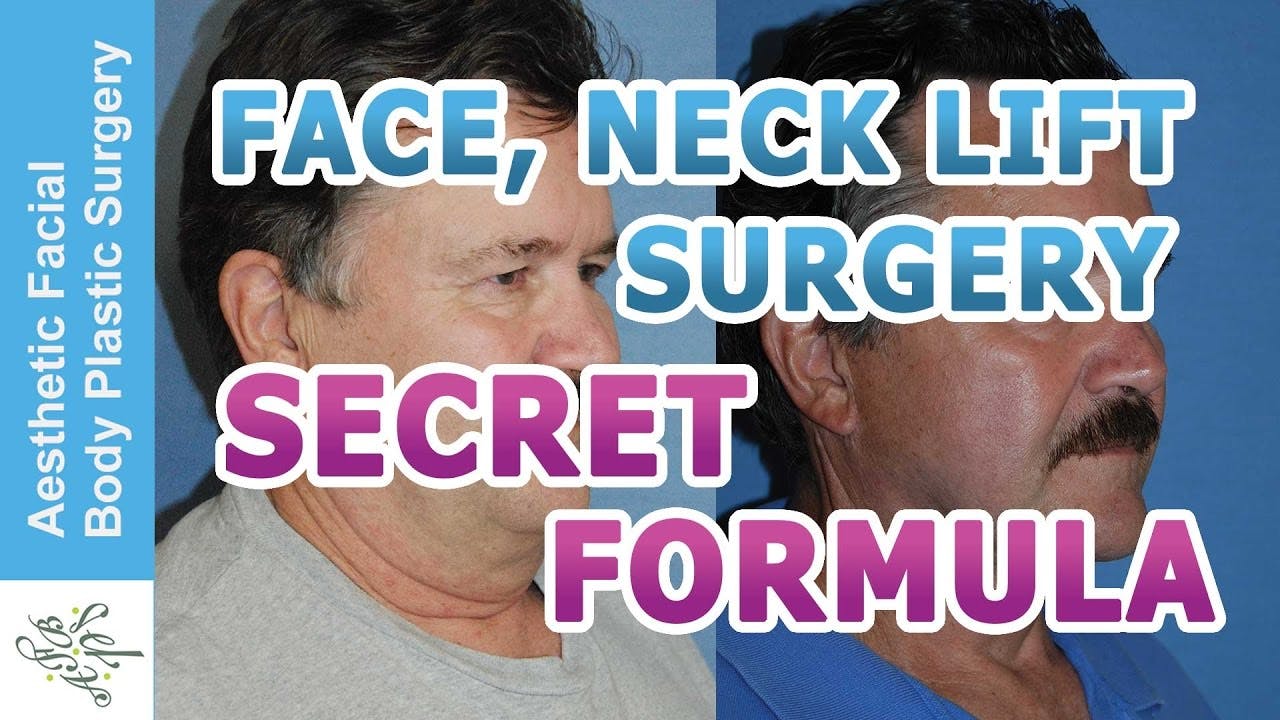
 Learn Our Secrets Video by Seattle Bellevue's Dr. Young

video screenshot

Schedule A Consultation

Contact Us
Contact us media

Options for Anesthesia

Facelifts and other procedures are usually done with general anesthesia, which puts you to sleep. There are risks involved when you are having a procedure done under general anesthesia. Some people are concerned that it can permanently affect your mental abilities and your brain function, or even promote Alzheimer’s.

General anesthesia can put you more at risk for deep vein thrombosis, especially if you are a woman. Other risks of general anesthesia include trauma to your breathing tube, waking up during the surgery, and malignant hyperthermia. This is why we elect to use intravenous sedation (known as IV sedation). Many of these risks are avoided through IV sedation. You do not have to be relaxed to accept the endotracheal tube because you are breathing on your own. IV sedation means avoiding any minor damage to your brain function and is less likely to develop deep vein thrombosis. You also recover faster with IV sedation than with anesthesia.

Banner media

FaceLift Options

There are many variations available when it comes to a facelift. The deep plane facelift involves elevating the SMAS layer (superficial muscular aponeurotic system) and developing a plane right above the facial nerve and deeper structures. This releases the ligaments that hold your face. A deep plane facelift cuts the SMAS and pulls it up. Imbrication is used to describe the cutting and pulling up of the SMAS in the facelift procedure.

Plication lifts the SMAS up with sutures and pulls up the facial tissues and muscles rather than cutting and elevating the SMAS. This layer of facial muscles forms a big part of the SMAS. When you pull up the SMAS, you pull the face up. The platysma muscle is the sheet of muscle that blends into the facial muscles and the muscle that the facelift pulls up. Cutting and lifting up the SMAS is risky and puts the facial nerves at risk because the facial nerve is immediately under the deep plane. There are no real advantages to doing this extensive lifting with imbrication.

Plication lifts the SMAS with sutures and does not cut and elevate the SMAS in the deep plane, a safer option that achieves the same results. We have experience with over 1,400 facelifts. Through this experience, we have achieved better results with fewer complications with Plication, a less invasive approach. Fillers (Restylane, Perlane, Juvéderm, Radiesse) and neurotoxins (Botox/Dysport) are less invasive options. The problem with fillers and Botox is longevity, lasting three months to a year. They rarely last more than a year. Botox usually lasts up to four months.

A great option to consider is the YoungVitalizer, a breakthrough alternative with even better results than traditional procedures. It is a minimally invasive facelift option that does not require any facial incisions, can be done without general anesthesia, and is associated with much less discomfort than older techniques and traditional procedures. Choosing which procedure depends on what is most important for you. Everyone can benefit from adding volume through fillers or The YoungVitalizer. No matter what you decide, your appearance will improve.

Facelift before

After Upper and Lower Eyelid Lift, Facelift, and Platysmaplasty Neck Lift with Liposuction of the Neck. This patient had skin and muscle taken from the upper eyelid and skin and fat from the lower eyelid in this quad blepharoplasty.

facelift after

After Upper and Lower Eyelid Lift, Facelift, and Platysmaplasty Neck Lift with Liposuction of the Neck. This patient had skin and muscle taken from the upper eyelid and skin and fat from the lower eyelid in this quad blepharoplasty.

FaceLift Consultation

We will discuss all the details of the procedure and listen to your concerns. A facelift is a big step. Your consultation will allow you to express what you actually want to improve in your face. This will help Dr. Young and his team to give you the options available to you. We go over all the things you might want to improve, beginning at the top. Let's say you don't like the way your eyes look. If your eyebrow is drooping, you may want to have a brow lift. How do we determine if you need it? If the distance from the bottom of the eyebrow to the eyelid margin is less than the colored part of your eye, you could benefit from a brow lift.

We discovered in a study that the ideal distance is one iris width. For your face, you can look to improve your jowls and facial sagging in the lower part of your face. We would then recommend a lower facelift. If you have neck laxity, a double chin, or a turkey gobbler, we would suggest a neck lift. For everything else in the face, you can benefit from the YoungVitalizer, an incisionless facial rejuvenation procedure. You can also consider individual treatments like an upper or lower eyelid, eyelift, brow lift, midface lift, and fillers. But you can avoid doing all of those procedures and get all of it done with the YoungVitalizer.

Banner media

Is a FaceLift Right for Me?

It depends on your own anatomy and your health history. If you kept the same weight all your life, a facelift might not be the best option for you. Our team has a great understanding of the aging process and can best assess your situation. A big part of aging is brought on by the loss of volume in the face. The face changes much like a grape becomes a raisin. The pulling and cutting of the raisin can flatten some of the folds away, but it won’t bring back the vigor and plumpness of the youthful grape.

This same situation applies to pulling the face to make the face look younger. You can still get some improvement with a facelift, but you can end up with the undesirable appearance of a pulled and stretched look. This is the reason that filling has taken a big role in facial rejuvenation and lifting of the face. By filling in the raisins, you are more likely to get the grapes back to what they once were. If you gained a significant amount of weight and then dropped it, you might have extra skin that could be pulled back and taken away. This is where you could benefit from a facelift. All types of facelift procedures entail some element of elevating the skin in front of the ear, pulling on parts of the facial muscles, and finally lifting parts of the face. The areas that most people want lifted are the jowls, the folds around the mouth, and the neck.

The most common age for a facelift is between 45 and 65. Few know that aging actually starts in your late teens. It may not be as noticeable, but it progresses in your 20s and 30s. It becomes more of an issue when you reach your 40′s. Many people start with less invasive treatments like Botox and fillers like Restylane, Perlane, Juvéderm, and Radiesse. In terms of health, there are certain physical aspects that surgeons use to determine the level of risk from a facelift. The American Society of Anesthesiologists has a physical status classification system. We tend to limit most of our procedures to people in ASA 1 and 2 levels. Most people at level 2 will likely be required to get a medical clearance. People at ASA 3 or greater will likely need to have their procedure done in a hospital setting. Our facility is AAAHC certified.

Client Testimonials

Read More Testimonials

Amazing doctor

Amazing doctor and the result are amazing too.

—S.M.

Dr. Young is very personable

Dr. Young is very personable and was very detailed in his work, with much concern about his patients.

—L.C.

Very happy

Very happy with how my otoplasty turned out. Thanks Dr Young

—J.P.

More than pleased with the fantastic results!

I have had two procedures done by the amazing Dr. Young and am more than pleased with the fantastic results!

—C.V.

Amazingly impeccable after care

Amazingly impeccable after care from all of the staff, including of course Dr. Young who ensures the patient has access to him at all times.

—S.S.

I would recommend him to my family and friends.

My experience with Dr. Philip Young and his entire staff has been really positive! I would recommend him to my family and friends.

—J.Y.

It looks completely natural

Wonderful experience. The doctor did a little Botox around my eyes and it raised my droopy eyebrows - it looks completely natural.

—R.H.

I made the right choice.

I had a great experience. I had some deep scars from acne but now after a scar surgery, my over all skin texture is more smooth. I made the right choice.

—F.S.

A brilliant and amazing doctor.

I would like to share my experience. Dr.Philip removed a mole for me that was disfiguring my face. He removed it with a laser. It was a very wonderful experience. As I mentioned be...

—Allaa Kamill

Dr. Young is not only a superb surgeon, he is a kind, empathetic person

Dr. Young is not only a superb surgeon, he is a kind, empathetic person who values his employees, his patients and the community. He runs a very busy practice, with a long waiting ...

—Angela R.

My experience with Dr. Young and his staff was excellent.

My experience with Dr. Young and his staff was excellent. I had a blephaloplasty (eyelid lift) and from the 1st consult all the way through the follow-up care, the entire experienc...

—Tara Kenneway

The staff was super nice and accommodating!

The staff was super nice and accommodating! They were very informative. Dr Young was also very informative. You can tell he cares for all his patients! He always answers any questi...

—Haystacks Grassy

Dr. Young and his team are spectacular!

Dr. Young and his team are spectacular! They helped me with a scar revision with the utmost sensitivity and care. The follow up is amazing, they truly take time to make sure you ar...

—Amira Beidas

He went above and beyond!

Dr. Young is an outstanding plastic surgeon who is very passionate about his work. He made me feel very comfortable with the surgery I came in for. He went above and beyond!
I w...

—chuck meyer

I trust him and his work and will keep coming back!

I’ve been a patient of Dr. Young for over 10 years and have had several procedures with him, including Asian blepharoplasty, Perma lip implants, Asian rhinoplasty, and neck liposuc...

—Taylor D

Dr Phillip Young and his office are fantastic!

Dr Phillip Young and his office are fantastic! They are thorough, patient, and kind. Particularly, I appreciate Dr Young’s attentiveness and expertise - I previously went to Seoul ...

—Carolyn Chong

Truly grateful to Dr Philip Young

Truly grateful to Dr Philip Young for taking such excellent care of me before, during and after my face, neck and brow lift. I have felt well informed and well cared for through...

—Jennifer Kent

Kindest Doctor I’ve ever met!

I can’t say enough about Doctor Young! He is an amazing person and Doctor! I drive four hours there and four hours back just to see him! He is a perfectionist and loves to help peo...

—Stacia Wright

How Much Does a FaceLift Cost?

The range for facelifts is between $6000 and $15000, depending on what you get done. A mini facelift can range between $5000 and $7500. A face and neck lift ranges between $9500 and $12500. The pricing includes your anesthesia and follow-up care. A mini facelift is less extensive with smaller incisions. The results are usually less than a full facelift, but it may be what you need to give you the subtle results you are looking for. A traditional facelift involves more of the face, requires longer incisions, and elevates the SMAS (superficial muscular aponeurotic system) and the layer deep to it. The mini facelift does not typically elevate the deeper layer underneath the SMAS but rather pulls up the SMAS with sutures.

Banner media

FaceLift Recovery

Your sutures usually come out a week or so after your surgery. We usually have you wear a wrap for the first week or two, all day, and then for two more months at night.

Drains are sometimes used and come out after a day or two. Most of the swelling disappears after a week. It varies for each person. You may have minor swelling that lasts longer than a week. We have follow-up appointments with you during the first week to make sure you are headed in the right direction. Based on wound healing studies, you will have 20% of your healing in two weeks, 60% in six weeks, and 80% or more at six months.

Newsletter Signup

This field is required.
Submit Information

This site is protected by reCAPTCHA and the Google Privacy Policy(opens in a new tab) and Terms of Service(opens in a new tab) apply.

Accessibility: If you are vision-impaired or have some other impairment covered by the Americans with Disabilities Act or a similar law, and you wish to discuss potential accommodations related to using this website, please contact our Accessibility Manager at (425) 696-7689.
Contact Us